Motorway Homepage Redesign
Redesigning the homepage to increase conversion and organic visibility.
The Challenge
A homepage that hadn’t been revisited since the 2019 rebrand
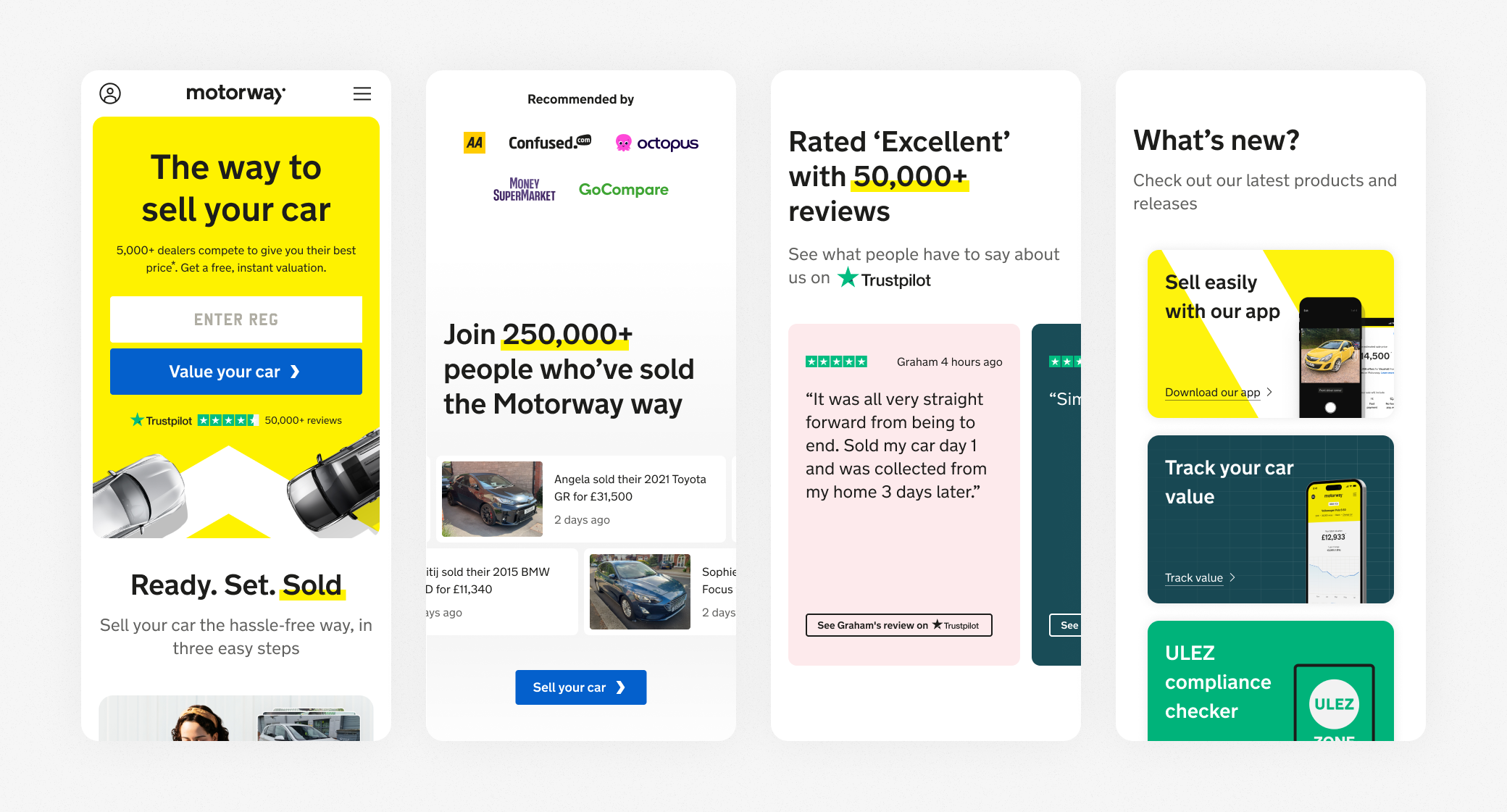
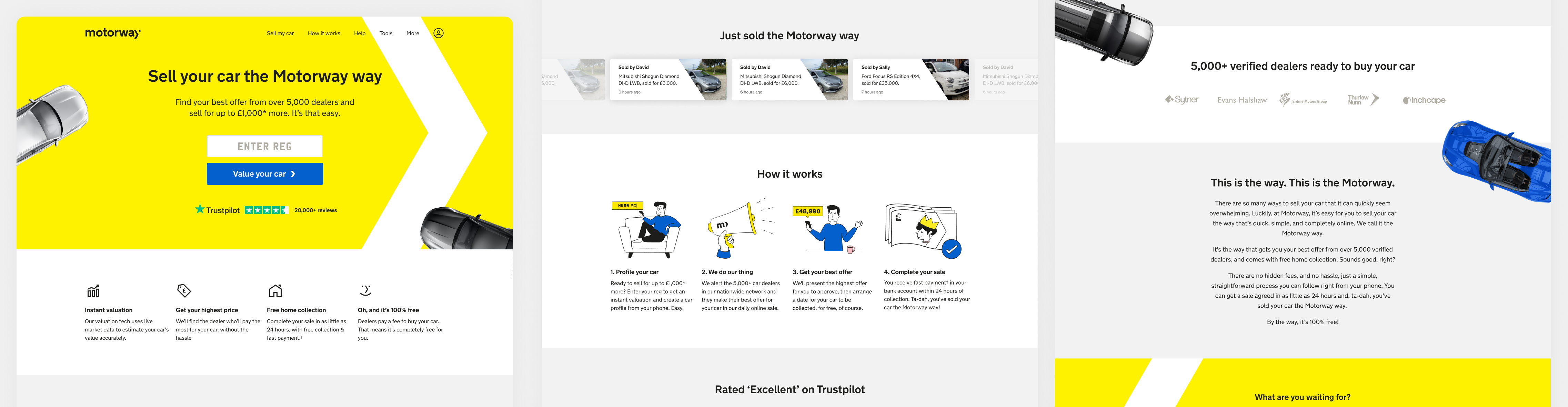
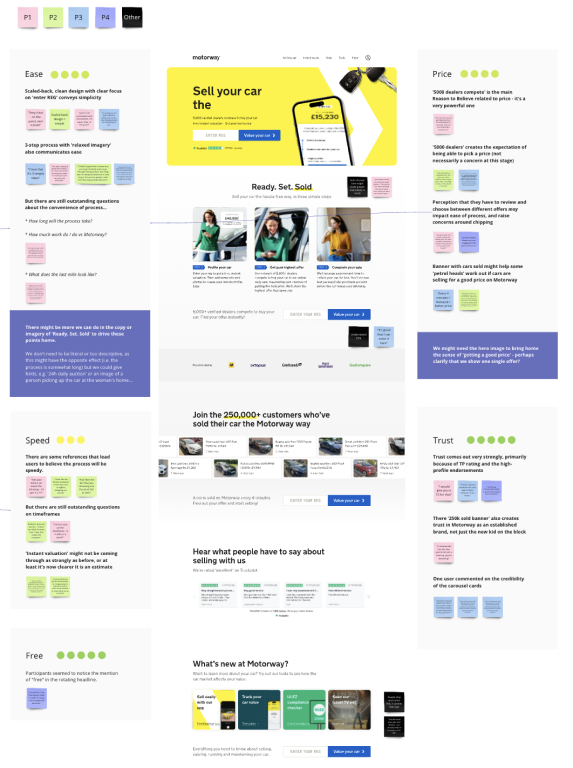
The Motorway homepage was legacy code with dated UX and no clear data to inform decisions. Research from Simon Kucher (1,000+ users) identified five critical user concerns: Price, Ease, Speed, Trust, and Free. Our homepage wasn’t addressing these effectively.
Price and Free messaging was buried. Ease was explained too far down the page. Speed benefits were scattered. Social proof was limited to a single Trustpilot badge. And SEO opportunity was massive: poor information hierarchy, slow page speed, weak internal linking.
The business goal was clear: increase enquiries to 6.5M in Q3 through SEO improvements, reducing CPE from £5.50 to £5.22.
Approach
Data-driven process, not design by committee
This project required both strategic thinking and stakeholder management. As Lead Designer, I facilitated workshops, managed multiple opinions, conducted user research, and drove visual design - all while ensuring data guided decisions, not emotion.
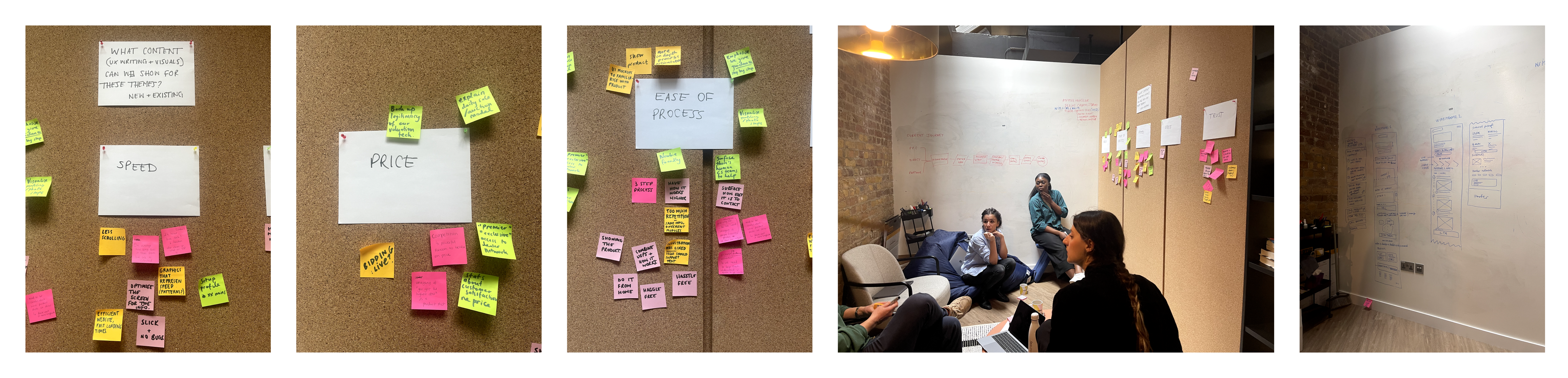
- Stakeholder Workshop Brought together brand designers, PM, and content team to align on research findings and brainstorm solutions addressing the five key areas.
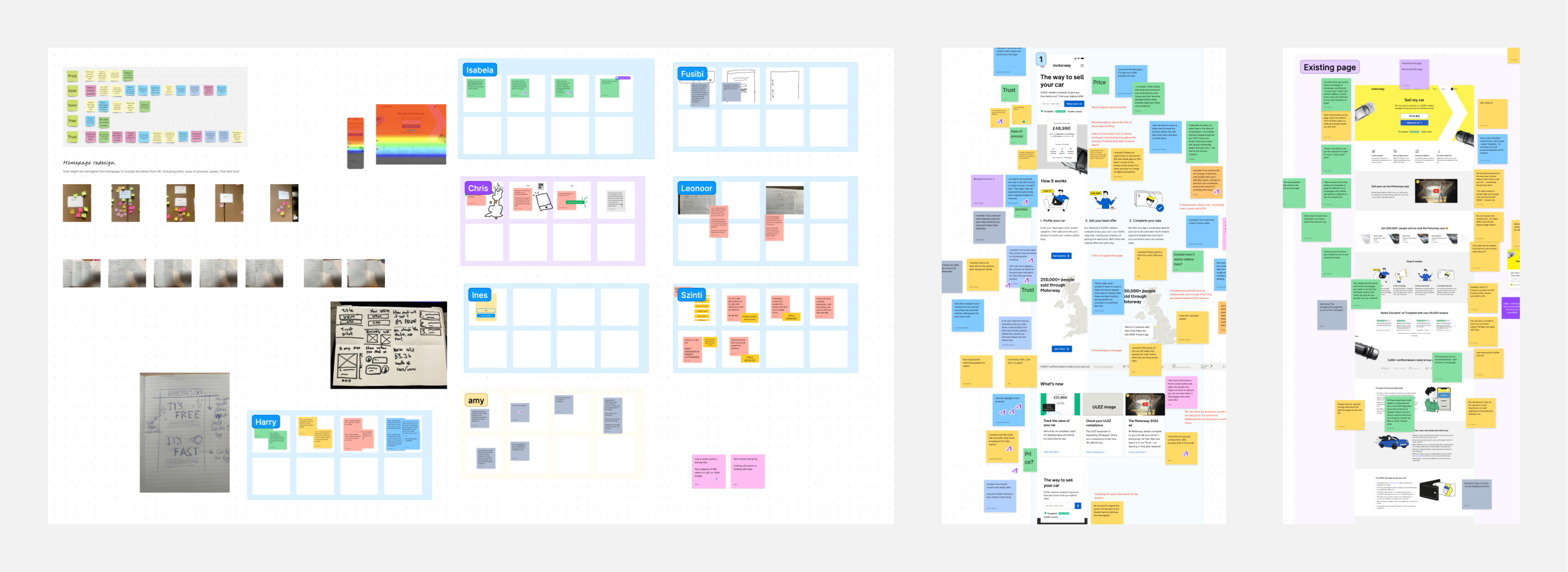
- Design Sprints Worked in rapid one-week cycles: design, feedback, iterate, test. This kept momentum high and stakeholders informed weekly.
- User Research Conducted interviews testing each section against the five key research areas. Validated assumptions before building.
- Iterative Testing Used user feedback to refine designs. Continuously tested hypotheses with real users to ensure changes resonated.
- A/B Testing Once built, scheduled A/B tests on the hero section using Cameleeon to validate highest-impact changes.
Strategic Decisions
Research-grounded changes, not cosmetic updates
Reordered Information Hierarchy
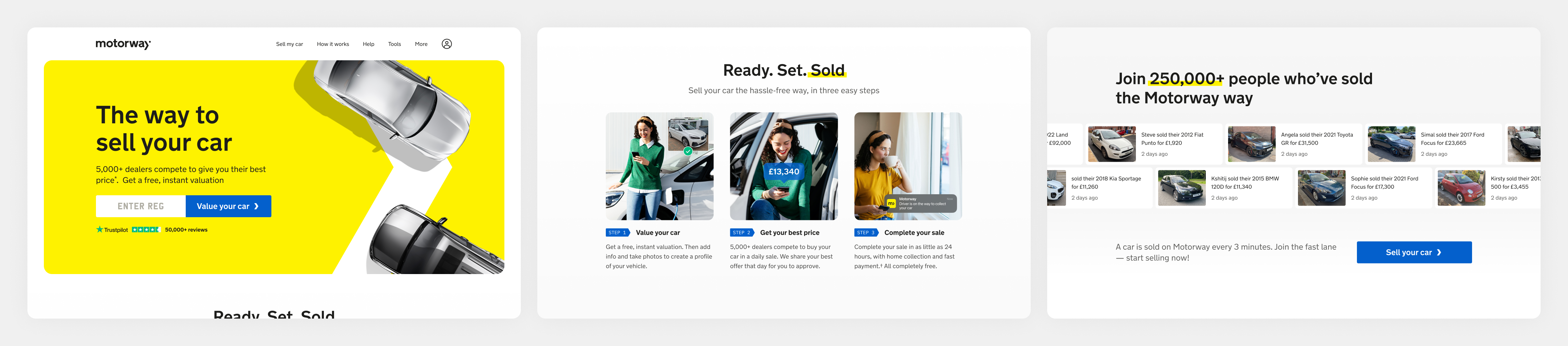
Moved “Ease” messaging above the fold. Simplified the five-step process into clearer visual steps. Ensured Price, Free, and Speed were prominent in hero messaging.
Simplified Visual Language
Created unified visual treatments for the steps that cascade through the product funnel. Reduced cognitive load with clearer type hierarchy and multiple CTA touchpoints.
SEO-First Approach
Improved information hierarchy for better crawlability. Added strategic internal linking with primary keyword “sell my car”. Optimised page speed through code and asset improvements.
Social Proof Expansion
Added trust signals beyond Trustpilot - customer testimonials, instant valuation proof, same-day guarantee. Emphasised transparent process at key decision points.
Testing & Validation
Every major decision backed by data
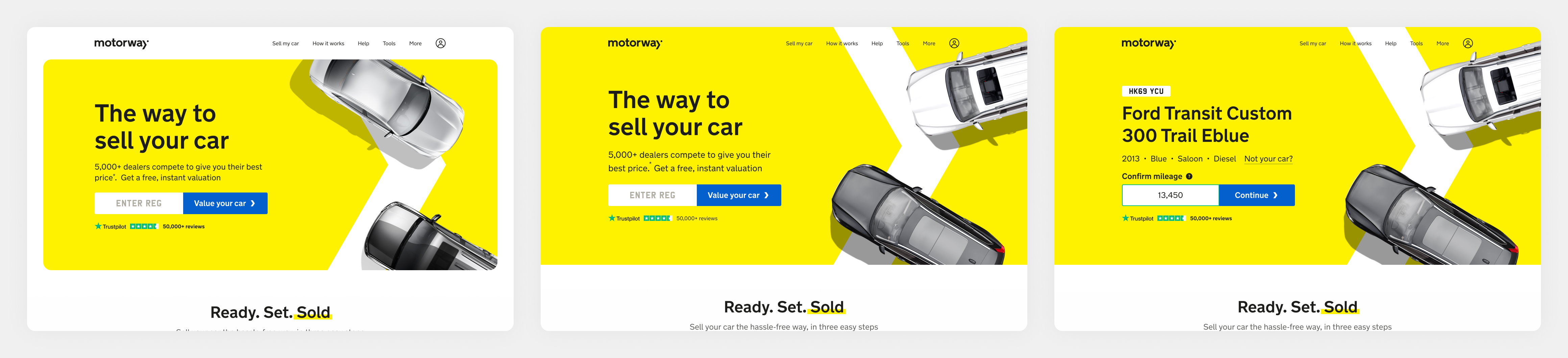
Rather than making changes based on gut feel, I set up A/B tests to validate every major decision. The full-bleed hero performed better than the navbar-heavy hero - counterintuitive for some stakeholders, but data proved it reduced distraction and increased focus on the value prop.
Users scrolled further on the new design, seeing more of the five key messaging areas. Offer selection increased 7%, and SEO visibility jumped 35% across all devices. This data became crucial for securing stakeholder buy-in on further iterations.
Results
Measurable business impact
The redesign delivered clear results. Beyond metrics, the project established a data-driven culture around the homepage - it’s now a continuous testing playground, not a “set and forget” page.
Reflection
Opinions are noise without data
The co-founders and stakeholders had strong feelings about the homepage. Without user research and A/B testing, we’d have made changes that felt right but didn’t work. Instead, by leading with data and bringing stakeholders along on the research journey, we built consensus around bold changes.
Data beats opinions. Stakeholder alignment is design work. Iterating is faster than perfecting. And the homepage never ends - this wasn’t a project deliverable; it became part of a continuous optimisation roadmap.
Team